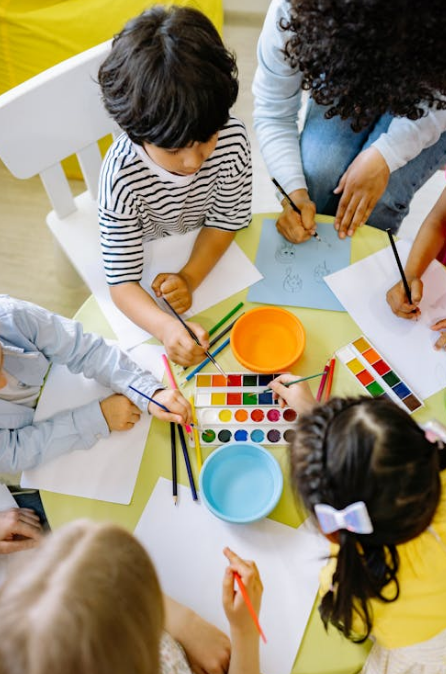
Strategies for Encouraging Student Collaboration and Peer Learning in the Classroom
Student collaboration and peer learning are essential components of a dynamic and effective classroom environment. These approaches not only enhance…
Student collaboration and peer learning are essential components of a dynamic and effective classroom environment. These approaches not only enhance…
Attention Deficit Hyperactivity Disorder (ADHD) is a neurodevelopmental disorder that affects many children, characterized by symptoms such as inattention, hyperactivity,…
Gamification, the application of game-design elements in non-game contexts, has become a popular strategy in education to enhance student motivation…
Classroom management is a critical aspect of teaching that directly impacts the learning environment and student success. Effective classroom management…
Inclusive education is a philosophy that aims to provide all students, regardless of their abilities or disabilities, with equitable opportunities…
Data-driven instruction is an educational approach that relies on data analysis to inform teaching practices and personalize learning experiences. By…
Social-emotional learning (SEL) programs are integral to holistic education, emphasizing the development of skills such as self-awareness, self-management, social awareness,…
In the modern educational landscape, technology integration has become essential for creating engaging learning environments and improving student outcomes. Effective…
Blended learning, which combines traditional face-to-face instruction with online learning activities, has gained significant traction in both K-12 and higher…
Project-based learning (PBL) is an educational approach that emphasizes learning through engaging projects. Students gain knowledge and skills by working…