














Early childhood is an important stage of life. What happens during these years shapes how children think, feel, communicate, and interact with the world around them. Among the earliest structured learning environments, kindergarten plays an important role.
It contributes to preparing young children for academic success and personal growth. It also introduces routines, relationships, and learning habits that influence development far beyond the early years.
Let’s explore 4 reasons why this early educational stage is essential for children. Each reason focuses on how it supports learning, behavior, confidence, and long-term outcomes. Read on
Builds a Better Foundation for Learning
The early years of education are not about memorizing facts or mastering complex subjects. They are about building the foundation on which all future learning stands. Children at this stage learn how to listen, follow instructions, ask questions, and explore ideas in a structured yet supportive environment.
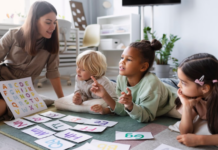
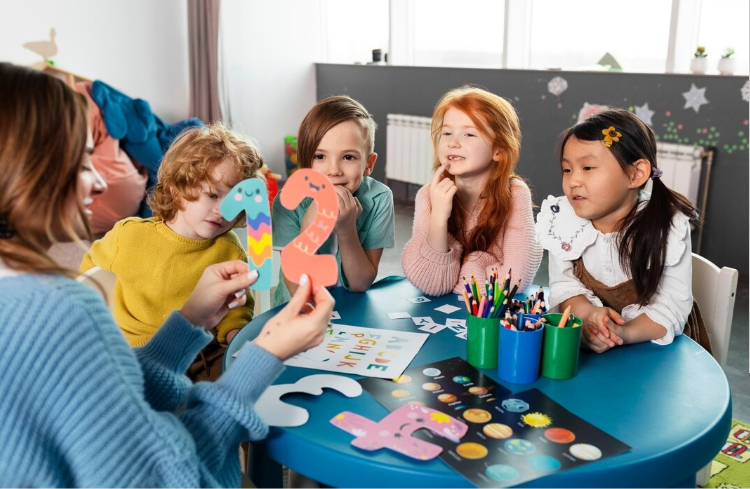
These skills become the base for reading, writing, mathematics, and problem-solving in later grades. In a kindergarten setting, children encounter letters, numbers, shapes, and sounds through activities that feel natural and engaging.
Learning happens through stories, conversations, creative play, and guided exploration. This approach helps children understand concepts instead of simply repeating information. As a result, they develop curiosity and a positive attitude toward learning.
Develops Social and Emotional Skills
Academic knowledge alone does not determine a child’s success. The ability to communicate, cooperate, and manage emotions is also important. One of the greatest strengths of early education is its impact on social and emotional development.
In a structured learning environment, children interact with peers from different backgrounds and personalities. They learn how to share materials, take turns, and work together toward common goals. These daily interactions teach patience, empathy, and respect for others.
Children begin to understand that their actions affect those around them, which is a key step in emotional maturity.
Encourages Language and Communication Growth
Language development increases rapidly during early childhood. Exposure to rich conversations, stories, and expressive activities plays a vital role in shaping communication skills. An early educational environment offers daily opportunities for children to hear and use language in meaningful ways.
Teachers model clear speech, introduce new vocabulary, and encourage children to express thoughts and ideas. Storytime, group discussions, and imaginative play allow children to practice listening and speaking.
These interactions improve pronunciation, sentence structure, and comprehension in a natural and engaging way.
Supports Cognitive and Creative Development
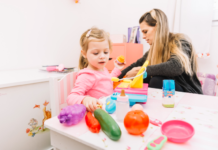
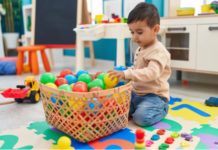
Cognitive development during early childhood is improved by exploration, curiosity, and hands-on experiences. An early learning environment is designed to stimulate thinking while allowing children to learn at their own pace. Activities are planned to challenge the mind without causing stress.
Through puzzles, games, and guided exploration, children learn how to solve problems and think logically. They begin to recognize patterns, make predictions, and understand cause-and-effect relationships. These skills form the basis for critical thinking and analytical reasoning later in life.
Creativity also flourishes during this stage. Creative activities do not have fixed outcomes, which allows children to experiment and innovate. This freedom boosts original thinking and self-expression.